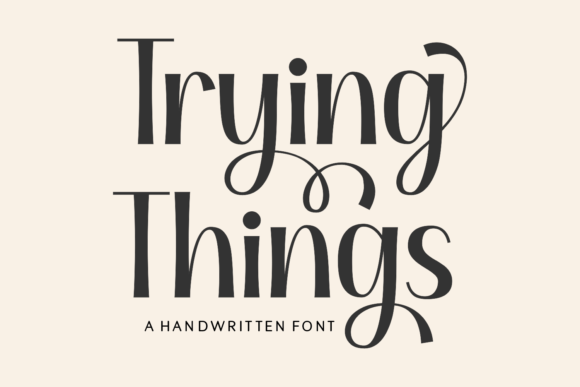
Trying Things: A Charming Script Handwritten Font
I sat at my craft table this morning, surrounded by jars of soy wax and a stack of blank kraft paper labels, searching for the perfect touch to elevate my candle collection. The scent of vanilla and sandalwood filled the air as I opened my design software, scrolling through my library of Fonts until I landed on Trying Things. This font feels equally charming and elegant, instantly capturing the handmade warmth I wanted to convey without looking overly polished or mass-produced. As I typed out the product name, watching the ink-like strokes appear on my screen, I knew this was the typeface that would bring my brand story to life.
Trying Things for Wedding Invitations and Elegant Branding
When I first started designing wedding stationery for friends, I realized that the right Script Handwritten font could make or break the entire mood of an event. Trying Things offers that delicate balance between playful charm and sophisticated grace, making it an ideal choice for wedding invitations where every letter needs to feel personal yet refined. Unlike rigid display fonts, this typeface mimics the natural flow of a human hand, adding an emotional layer to the invitation suite that guests can almost feel before they even read the words. Whether you are creating a full invitation set with matching RSVP cards or just a simple welcome sign, the fluidity of Trying Things ensures your designs stand out in a crowded market of digital templates.
The elegance of this font shines particularly well when paired with high-quality cardstock and subtle foil stamping. I have found that using Trying Things for the couple's names creates a focal point that draws the eye immediately, while keeping the rest of the text legible and inviting. It transforms a standard announcement into a cherished keepsake, proving that a well-chosen handwritten font is more than just decoration—it is the voice of your brand identity. For boutique designers and independent calligraphers, integrating this style into your portfolio can significantly enhance the perceived value of your services.
Using Trying Things for Thank You Cards and Greeting Cards
Beyond weddings, the versatility of Trying Things extends beautifully into the realm of everyday correspondence, specifically thank you cards and greeting cards. There is something inherently sincere about a message written in a script that looks like it was penned by hand, and this font captures that sentiment perfectly. When I designed a batch of holiday thank you notes last season, I used Trying Things to write "With Gratitude" at the top of each card, and the result was a warm, inviting aesthetic that felt far more personal than standard block letters.
This Script Handwritten style works exceptionally well for short phrases and heartfelt sentiments, which are common in greeting cards for birthdays, anniversaries, and holidays. The curves and loops of the letters add a decorative flair that elevates simple messages into artful expressions. If you are a printable creator selling digital downloads, offering a template featuring this font can attract buyers looking for unique, non-generic designs. The charm of the typeface ensures that your customers' messages will resonate deeply with their recipients, fostering stronger connections through thoughtful design.
Designing Logos and Business Cards with Trying Things
For small business owners and makers, establishing a strong visual identity often begins with a logo that reflects the soul of the brand. Trying Things serves as a powerful tool for logo design, especially for boutiques, bakeries, and lifestyle brands that want to project authenticity and creativity. The handwritten nature of the font suggests craftsmanship and care, qualities that customers actively seek in the handmade marketplace. When I updated my own shop logo, I swapped out a generic serif font for Trying Things, and the immediate shift in perception was palpable; the brand suddenly felt more approachable and artisanal.
In addition to logos, this font is stunning on business cards, acting as a memorable signature for your contact information. While readability is key for phone numbers and websites, using Trying Things for your business name or tagline adds a distinctive character that makes your card unforgettable. It pairs beautifully with clean sans serif fonts for the secondary details, creating a balanced composition that is both stylish and functional. By incorporating this creative font into your core branding materials, you signal to potential clients that you value detail and artistic expression, setting the tone for all future interactions.
Crafting Quotes and Wall Art with Script Handwritten Fonts
One of my favorite projects involves turning inspirational quotes into printable wall art, and Trying Things has become my go-to typeface for these designs. The way the letters connect and flow gives the text a rhythmic quality that enhances the meaning of the quote itself. Whether it is a motivational phrase for a home office or a sweet sentiment for a nursery, this font brings a sense of movement and life to static images. I recently created a series of farmhouse-style signs using this font, and the results were so cohesive that they looked like they belonged in a curated interior design magazine.
When designing for printables or large-format signs, it is important to consider how the intricate details of the Script Handwritten style hold up at different sizes. Trying Things maintains its clarity even when scaled down for smaller prints, but it truly shines in larger formats where the nuances of the strokes can be appreciated. This makes it a versatile asset for creators who produce everything from digital downloads to physical merchandise. By choosing a font with such distinct personality, you ensure that your wall art pieces offer more than just decoration; they offer a piece of the maker's spirit to hang on someone's wall.
Practical Tips for Using Trying Things on Product Labels and Packaging
As a maker who sells physical products, I know that packaging is the first physical touchpoint a customer has with your brand. Using Trying Things on product labels, tags, and packaging boxes can turn a simple unboxing experience into a moment of delight. The font's charm aligns perfectly with the ethos of handmade goods, suggesting that the item inside was crafted with love and attention to detail. I have used it on candle labels, soap wrappers, and even tote bags, finding that it adapts seamlessly to various textures and materials.
However, when applying this font to cutting machines like Cricut or Silhouette, it is crucial to test the design first. The thin lines and flourishes of a handwritten font can sometimes be tricky for weeding small vinyl decals. I recommend checking the included styles and alternates to see if there are simpler versions of certain characters that might cut cleaner. Additionally, always review the commercial font licensing to ensure you are permitted to use the font on products you intend to sell. With proper preparation and respect for the design constraints, Trying Things can be the finishing touch that makes your product line look professional and premium.
Pairing Trying Things with Other Typography Styles
To get the most out of Trying Things, understanding font pairing is essential for creating balanced and readable designs. Because this Script Handwritten font is so expressive, it works best when paired with a neutral counterpart, such as a clean sans serif font or a simple serif font. This combination allows the charm of the script to take center stage while ensuring that the informational parts of your design remain easy to read. For example, on a wedding invitation, I might use Trying Things for the names and date, but switch to a minimalist sans serif for the venue details and time.
This contrast not only improves legibility but also adds visual interest and sophistication to the overall layout. Whether you are designing social media graphics, website headers, or printed brochures, mixing a bold display font or a modern typography style with Trying Things can create a dynamic hierarchy that guides the viewer's eye. By mastering these pairings, you can unlock the full potential of the font, ensuring that your designs communicate clearly while maintaining that special, handmade appeal that defines your creative work.